

There’s a quiet belief most of us carry without ever questioning it: I am my body.
It sounds harmless. Obvious, even. You look in the mirror, you see a face, a shape, a reflection, and you think, “That’s me.” But that assumption shapes almost everything. Your confidence. Your fears. Your relationships. Your sense of worth.
And it’s wrong.
You have a body. You experience life through a body. But you are not your body. The distinction sounds subtle, but it changes everything.
Because the moment you fully identify with your body, you lock yourself into a fragile identity. One that ages, changes, gets judged, gets sick, gets compared. You tie your entire sense of self to something that was never meant to hold that weight.
And then you wonder why you feel unstable.
Why Identification With the Body Creates Suffering
Let’s call it what it is. Identifying with your body is the root of a lot of unnecessary pain.
If your body is you, then:
- Weight gain feels like failure
- Aging feels like loss
- Illness feels like betrayal
- Other people’s opinions feel like truth
You start managing your life around protecting, improving, or validating your physical form. You chase approval. You avoid rejection. You compare constantly. It turns into a full-time job.
And here’s the part people don’t like hearing: even if you “win” that game, it never sticks. You can have the perfect body by society’s standards and still feel insecure. You can be praised and still feel unseen. Because the problem isn’t your body. It’s the identity you’ve attached to it.
What It Actually Means to Dis-Identify
Dis-identifying with your body doesn’t mean rejecting it or neglecting it. This isn’t about pretending your physical experience doesn’t exist. It means putting your body back in its proper place.
Your body is a vehicle. A tool. A temporary form that allows you to move through the world. It’s not your essence. It’s not your identity. It’s not your worth.
Think about it like this. You don’t confuse yourself with your car. You take care of it, you use it, you might even feel attached to it, but you know it’s not you. If it gets scratched or breaks down, it’s inconvenient, maybe even upsetting, but it doesn’t shake your core identity. That’s how your relationship with your body is meant to feel.
Right now, for most people, it doesn’t.
How to Start Dis-Identifying (Without Becoming Disconnected)
This isn’t an overnight shift. You’re undoing years, sometimes decades, of conditioning. But there are simple ways to start loosening the grip.
- Watch the language you use about yourself
Pay attention to how often you equate yourself with your body.
“I am fat.”
“I am ugly.”
“I am aging badly.”
Those statements aren’t observations. They’re identity claims. Shift the language. Create space between you and the body.
“My body has gained weight.”
“My skin is changing.”
It might feel awkward at first, but it breaks the automatic fusion.
- Notice who is observing
This one is powerful if you actually sit with it. You can notice your body. You can feel sensations. You can observe your thoughts about your body. So who is doing the noticing?
There’s an awareness there that exists independently of what’s being observed. That awareness doesn’t gain weight. It doesn’t wrinkle. It doesn’t get judged.
That’s closer to who you actually are.
- Stop outsourcing your worth
When you’re identified with your body, you rely on the outside world to confirm your value. Compliments feel like oxygen. Criticism feels like suffocation. You have to cut that dependency.
Other people are reacting to a surface-level experience. Their opinions are filtered through their own conditioning, preferences, and insecurities. Letting that define you is shaky at best.
Start building an internal sense of worth that isn’t tied to appearance. It’s quieter. Less flashy. But it’s stable.
- Take care of your body from respect, not fear
A lot of “self-care” is actually fear in disguise.
Working out so you don’t gain weight. Eating clean so you don’t feel guilty. Obsessing over routines so you don’t lose control.
That’s not respect. That’s anxiety management.
When you dis-identify, the relationship changes. You take care of your body because it supports your life. Because it allows you to experience things. Because it matters. Not because it defines you.
Why This Shift Actually Matters
This isn’t some abstract spiritual idea. It has real, practical consequences.
When you stop identifying with your body:
You become harder to manipulate.
You stop chasing validation.
You move through the world with less fear of judgment.
You free up energy that used to be spent obsessing over appearance.
And your relationships change. You stop trying to be chosen based on how you look. You stop tolerating situations where your value is reduced to something physical. You start connecting in a way that’s actually real.
There’s also a deeper layer.
Most of the identities people cling to come from the body. Gender, race, attractiveness, age. These things shape experience, yes. They matter in the world we live in. But they’re not the full story of who you are.
When you loosen your grip on body-based identity, you create space for something bigger. Something less rigid. Less reactive. You stop living as a label and start living as a presence.
The Push Back You Might Feel
Let’s be honest. Part of you might resist this. Because identifying with your body gives you something concrete. It’s familiar. It’s easy to measure. You know where you stand, even if you don’t like it. Letting go of that can feel disorienting. It raises questions you might not have answers to yet. If I’m not my body, then who am I?
Good. Sit with that.
You don’t need a perfectly packaged answer. You just need the willingness to stop settling for the wrong one.
A Different Way to Exist
Dis-identifying with your body doesn’t make you detached. It makes you free. You can still enjoy your appearance. You can still express yourself physically. You can still take pride in how you look. But it stops being the foundation of your identity.
It becomes something you experience, not something you are. And that shift gives you something most people are quietly desperate for:
Stability.
Not the kind that comes from controlling everything on the outside, but the kind that exists underneath it all. The kind that doesn’t disappear when your body changes, or when someone else has an opinion.
If this idea resonates, it’s just one piece of a much bigger conversation.
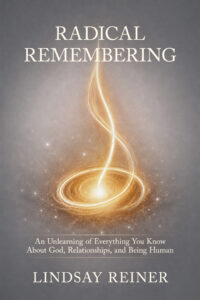
My book, Radical Remembering, goes deeper into this exact process. It challenges the identities you’ve been handed, the beliefs you’ve been living inside of, and the ways you’ve unknowingly limited yourself. It’s about stripping everything back to what’s actually true and learning how to live from that place.
If you’re ready to question who you’ve been told you are, you’ll probably find something in it that hits.
 Lindsay Reiner is a writer and visionary exploring what remains when inherited beliefs about God, love, and identity fall away. Her work examines how internal narratives shape human experience and how unlearning can become a path back to truth, agency, and wholeness. Drawing from lived experience, deep inquiry, and spiritual reflection outside religious doctrine, she invites readers to question what they were taught to fear, suppress, or outsource. Radical Remembering is her debut book. https://lindsayreiner.com