At times, we encounter a remembering that does not originate from our own life. A scent in the air. A certain landscape. A glance through a stranger’s window. And suddenly, we feel recognized by it.
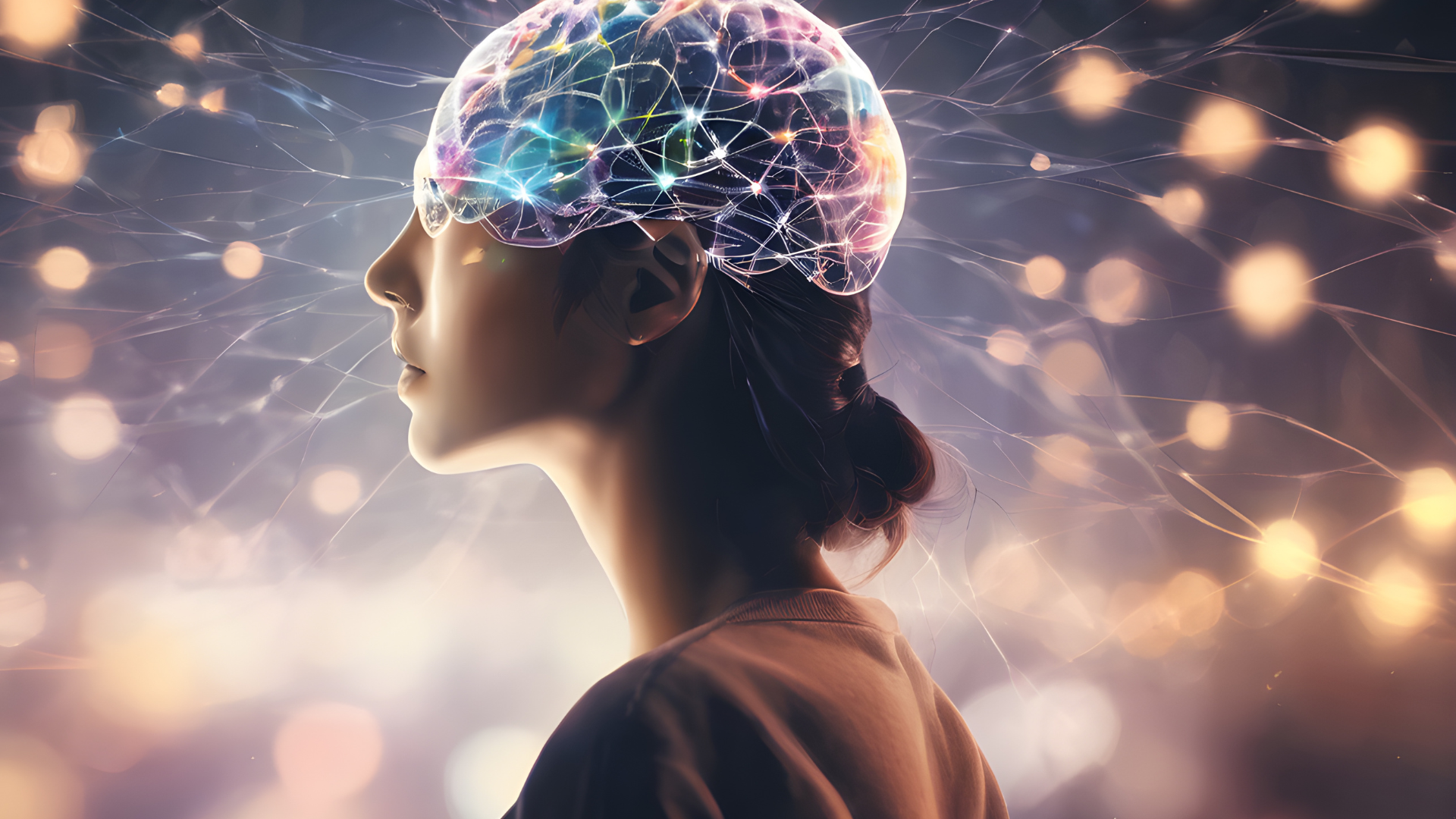
For centuries, memory has been understood as a product of the brain. Memory — a feeling, a place, or a time — was assumed to arise exclusively from neural activity, encoded in synapses and preserved within the architecture of the brain.
Yet some experiences challenge this model in profound ways. Near-death experiences in children, for example, especially those occurring during states of minimal or absent measurable brain activity, continue to raise questions that conventional neuroscience struggles to answer fully.
In our book Where the Light Begins, we detail cases of children who return from these states with memories that appear impossible within the boundaries of ordinary perception. Instead of being unconscious, these children experience an intensified awareness. They speak of people they have never met, places they have never seen, or languages they have never learned.
Among the most striking cases are children like Eli who encountered a deceased person during his near-death experience — a person he did not know in real life. Or Jan who saw a place unknown to him in real life but instantly recognized it as a place from his past. Then there is Liva who woke up and spoke a foreign language that she did not know before the event.
It is a form of remembering that does not appear connected to lived experience. It is as though memory exists independently of chronological life, waiting to emerge under certain conditions. So, if the brain quickly becomes inactive when the body approaches death, how is it possible that memories mentioned above can be retrieved?
What if memory does not begin in the brain, but belongs to something larger — a field of awareness that remains connected across time, space, and perhaps even beyond the limits of individual consciousness? According to some quantum physics theories, thoughts and language exist prior to their formulation as possibilities within the quantum world. That means memory would not necessarily be stored exclusively in the brain. Instead, they are fragments of ancient memories.
We see memory as something directed backward. Yet there are quantum physics theories that suggest that time does not exist as a linear sequence but as a field of overlapping potentials. In such fields, past, present, and future may exist simultaneously as possibilities. That indicates that there could be memories that are directed toward the future — premonition. Premonition that arises in children with and without near-death experiences.
Maybe every child carries such a thread within them: a memory that does not begin in the brain but in the deeper rhythms of life. The scent in the air. The certain landscape. The glance through a stranger’s window. In such moments, it may not be we who remember, but the image that remembers us.
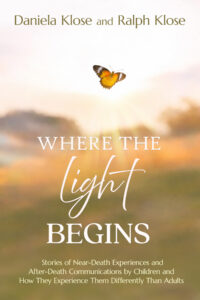
Read true stories of children’s near-death experiences and how they responded to them in our book Where the Light Begins: Stories of Near-Death Experiences and After-Death Communications by Children and How They Experience Them Differently Than Adults.
 Ralph and Daniela Klose are German authors and long-term collaborative partners in the fields of neuroscience, psychology, and consciousness research. Their book Where the Light Begins explores near-death experiences in children.
Ralph is a retired neuropsychologist with over three decades of clinical and academic experience, and Daniela is a medical writer and translator specializing in neuropsychology and transpersonal psychology. For many years, they worked as ghostwriters for researchers across Europe. They now write under their own names, connecting scientific expertise with years of hospice and end-of-life care experience to explore near-death-experiences and liminal states of consciousness. https://drklose.com