

There’s a quiet kind of power that doesn’t announce itself. It doesn’t hustle. It doesn’t try to prove anything. It doesn’t scramble for validation or chase identity like something just out of reach. It’s steady. Certain. Almost unbothered.
Most people spend their lives trying to become someone. A better version. A healed version. A more confident, more evolved, more “together” version. The entire self-help industry feeds this idea that you are a work in progress, always slightly behind where you should be. But that frame is flawed from the start.
You don’t actually need to become someone new. You need to remember who you were before you learned to question yourself. Before you started looking outside for answers you already had. Before you were taught that your instincts weren’t reliable. That your emotions were too much. That your natural way of being needed to be adjusted, refined, improved.
That’s where the real shift happens. Not in building a new identity, but in stripping away everything that was layered on top of the original one. Because if you’re honest, there was a version of you that didn’t hesitate the way you do now. A version of you that didn’t overanalyze every decision. A version of you that felt things fully, expressed freely, trusted quickly, and moved on just as quickly. That version didn’t need constant reassurance. Didn’t need to crowdsource opinions. Didn’t need to run everything through a filter of “Is this okay?” before acting.
That version knew. And then, slowly, that knowing got buried. It got buried under feedback, criticism, rejection, comparison, heartbreak, expectations. Not all at once. It happened in small, almost unnoticeable moments. A comment here. A disappointment there. A situation where trusting yourself didn’t go the way you hoped, so you decided maybe you shouldn’t trust yourself next time.
You adapted. You learned. You became more careful. More self-aware, in a way that actually disconnected you from yourself. Now you call it growth. But a lot of it is just conditioning. That’s why so many people feel stuck even when they’re doing all the “right” things. Reading the books. Listening to the podcasts. Going to therapy. Journaling. Reflecting.
They’re trying to fix a version of themselves that was never broken. They’re trying to add more when what they actually need is less. Less noise. Less input. Less second-guessing. Because underneath all of it, there’s still a part of you that hasn’t forgotten.
It shows up in flashes. That moment when you say something without overthinking and it lands perfectly. That gut feeling you had that turned out to be right. That decision you made quickly that felt aligned, even if it didn’t make sense on paper. That calm clarity that cuts through the mental clutter when you stop trying so hard to figure everything out.
That’s not something you need to learn. That’s something you need to trust. And trust doesn’t come from collecting more evidence. It comes from remembering.
Remembering what it feels like to move without constant self-surveillance.
Remembering what it feels like to believe your own perspective without needing it validated.
Remembering what it feels like to be internally anchored instead of externally driven.
This is where people get uncomfortable. Because remembering who you are requires letting go of who you’ve been trying to be. It means outgrowing identities that once felt safe. The people-pleaser. The overachiever. The one who keeps it together. The one who waits to be chosen. The one who explains themselves too much.
Those roles don’t dissolve cleanly. There’s friction. There’s grief. There’s a sense of disorientation when you stop operating the way you always have. You might feel less understood for a while. Less predictable. Less easy to categorize. That’s not a sign you’re doing something wrong. That’s a sign you’re coming back online.
Because the version of you that’s rooted in who you actually are doesn’t perform the same way.
They don’t bend as quickly.
They don’t tolerate what doesn’t feel right just to maintain harmony.
They don’t stay in situations that require them to shrink.
And that can change your entire life. Relationships shift. Some fall away. Others deepen in ways that feel more honest. Your decisions get simpler. Not easier, but clearer. You stop needing everything to make sense to everyone else before you act. You start noticing how much energy you used to spend managing perception instead of just living. And maybe the most surprising part is how quiet it feels.
There’s no dramatic moment where everything clicks into place and stays that way forever. It’s subtle. It’s steady. It’s choosing yourself in small ways, over and over again, until it stops feeling like a choice and starts feeling like your default. That’s the power people overlook because it doesn’t look impressive from the outside. There’s no big reveal. No transformation arc that’s obvious to everyone watching. Just a person who knows who they are, and moves accordingly. No explanation required.
That kind of certainty doesn’t come from becoming more. It comes from returning. From peeling back the layers of who you thought you needed to be. From questioning the beliefs you inherited without realizing it. From noticing where you abandoned your own instincts and deciding to pick them back up.
You don’t need to reconstruct yourself from scratch. You’re not starting from nothing. You’re starting from something that’s always been there, waiting for you to stop overriding it. That’s why this work can feel both grounding and unsettling at the same time. You’re not stepping into unfamiliar territory. You’re stepping back into something deeply familiar that you haven’t trusted in a long time.
And once you do, it changes how you see everything. Not because the world shifts. But because you do.
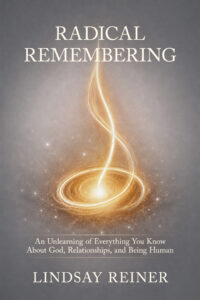
If this resonated, my book Radical Remembering goes deeper. It challenges the idea that you need to become someone better and instead walks you back to who you were before the noise, conditioning, and self-doubt took over. It strips away what isn’t you so you can trust your own voice again. If you’re tired of overthinking and ready to feel anchored in yourself, that’s exactly where this work begins.
 Lindsay Reiner is a writer and visionary exploring what remains when inherited beliefs about God, love, and identity fall away. Her work examines how internal narratives shape human experience and how unlearning can become a path back to truth, agency, and wholeness. Drawing from lived experience, deep inquiry, and spiritual reflection outside religious doctrine, she invites readers to question what they were taught to fear, suppress, or outsource. Radical Remembering is her debut book. https://lindsayreiner.com