

Imagine a child who suddenly begins to use words in a language that no one in their family speaks. Where do these words come from? Are they fragments of forgotten memories, unconsciously acquired knowledge, or do they touch upon an aspect of our consciousness that is still largely unexplored?
There are cases of adults and children who speak and understand languages which they have never learned, known as xenoglossy. It usually occurs while the person is in an altered state of consciousness. In some cases, only a few words are remembered but in other cases the person is able to talk to native speakers with complete fluency, sometimes even in linguistic varieties that have not been in use for centuries.
The research of psychiatrist Ian Stevenson of the University of Virginia School of Medicine became particularly well known. For many years, Stevenson studied children between about two and six years of age who reported memories of a previous life. In some of these reincarnation cases, unlearned foreign-language abilities were also described. However, there are also cases that occur independently of reincarnation.
Reports of unusual knowledge of foreign languages can also be found in connection with hypnosis and other trance states, e.g. holotropic breathwork, as well as occasionally in connection with end-of-life experiences and near-death experiences. Regarding the latter, we must ask: How do people gain knowledge of these languages in the intermediate state between life and death?
Some scientists, such as psychologist Théodore Flournoy, suggest cryptomnesia. This is a phenomenon in which previously acquired information or memories re-enter consciousness without the person recognizing them as memories. The person then experiences the content as new. A child, for example, might have casually heard words from a foreign language in early childhood, reproduce them later, and have no conscious memory of the original source.
In this context, sleep also plays a role. For a long time, scientists assumed that learning during sleep might be possible. However, carefully conducted experiments in which sleep was monitored using electroencephalography (EEG) did not find evidence that learning takes place during sleep. Nevertheless, according to Stevenson, the theoretical possibility remains that certain learning processes may occur during sleep that are inaccessible to the person during normal waking states but may become accessible during or shortly after a state of altered consciousness.
According to linguists, we do not have direct conscious access to syntax and other processes involved in language production. When speaking, we sometimes only know which specific word will come next when we actually say it, either aloud or internally. Thus, the unconscious carries out a surprisingly large part of language production itself. Some scientists, such as Karl Lashley, a pioneer of neuroscience, go even further: “No activity of mind is ever conscious.” The boy Mark from our book Where the Light Begins describes this as follows: “I didn’t know they were languages. I was just answering.”
However, unconscious language processes alone do not answer the question of why unlearned foreign-language expressions can arise after a near-death experience. Although near-death experiencers often report that communication between them and other “beings” during the near-death experience occurs in a nonverbal or telepathic way, there are nevertheless reports in which a voice is heard. A woman in a study carried out by The Evergreen State College who underwent a near-death experience due to blood poisoning recalled: “A voice spoke behind me, a big voice. It sounded like it was through a megaphone.”
Could this voice, perhaps in a foreign language, become so deeply embedded in the memory of the near-death experience that a person still remembers it for a short time afterward, comparable to waking up from a dream? Or does a “secondary personality” emerge after all, as some scientists suggest? Studies have shown that during trance states, the normal personality in children and adults is largely suppressed. This is supported by cases from hypnosis sessions, as seen in the case of a woman studied by psychiatrist Ian Stevenson. Under hypnosis, she underwent a profound change in voice and personality and took on the characteristics of a male identity. She spoke fluently in Swedish, a language she did not speak or understand during her normal state of consciousness.
Quantum-inspired theories, such as those by physicist Amit Goswami or consciousness researchers Stuart Hameroff and Roger Penrose, suggest that language does not only arise in the brain but emerges as resonance within a deeper field. In this view, words appear as a fragment of memory. Furthermore, linguist Noam Chomsky’s theory of generative grammar proposes that humans possess a universal language module. One might speculate that in altered states of consciousness, unconscious patterns of this syntax may be activated, resulting in sound fragments.
A universal language of origin, then? In this regard, a study from South India on after-death communication is interesting, in which a few participants reported that the deceased had communicated with them in a language unknown to the participants.
Unlearned knowledge of foreign languages brings us to a boundary between linguistics, memory research, psychology, and consciousness research. Scientists have not found a definitive explanation for this phenomenon yet. If one day it could be convincingly demonstrated under controlled conditions that a person possesses complex linguistic knowledge that they could not possibly have acquired through normal means, we would have to reconsider some of our ideas about memory and consciousness.
Read true stories of children’s near-death experiences and how they responded to them in our book Where the Light Begins: Stories of Near-Death Experiences and After-Death Communications by Children and How They Experience Them Differently Than Adults.
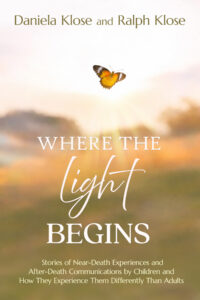 Ralph and Daniela Klose are German authors and long-term collaborative partners in the fields of neuroscience, psychology, and consciousness research. Their book Where the Light Begins explores near-death experiences in children.
Ralph is a retired neuropsychologist with over three decades of clinical and academic experience, and Daniela is a medical writer and translator specializing in neuropsychology and transpersonal psychology. For many years, they worked as ghostwriters for researchers across Europe. They now write under their own names, connecting scientific expertise with years of hospice and end-of-life care experience to explore near-death-experiences and liminal states of consciousness. https://drklose.com