
Fear of other people doesn’t usually show up looking like fear. It wears better disguises. It calls itself “discernment,” “standards,” “just being realistic,” or “that’s just how I was raised.” It sounds reasonable. It feels justified. But underneath it, a lot of the time, is something much simpler and much more human: discomfort with the unfamiliar.
We are wired to look for safety. And what feels safe is what feels known. People who look like us, think like us, believe what we believe, live the way we live. That becomes our baseline for “normal.” Everything outside of that can start to feel like a threat, even when it’s not.
The problem is, most of what we think is “normal” was handed to us. It came from our families, our communities, our media, our early experiences. It wasn’t consciously chosen. It was absorbed. And once something gets absorbed early enough, it starts to feel like truth instead of conditioning.
So when we meet someone who challenges that conditioning, it can feel jarring. Not because they’re dangerous, but because they don’t fit into the mental framework we’ve been using to make sense of the world. That discomfort gets translated into judgment. Or avoidance. Or even hostility.
If you actually want to stop fearing people who are different from you, you have to be willing to question the framework itself.
Start here: most fear of others isn’t about them. It’s about you not understanding them.
And that gap between you and them? That’s where fear grows.
When you don’t understand someone’s culture, beliefs, lifestyle, or identity, your brain fills in the blanks. And it doesn’t usually fill them in with generosity. It fills them in with assumptions, stereotypes, or worst-case scenarios. That’s how you end up afraid of people you’ve never actually taken the time to know.
You don’t fix that by pretending differences don’t exist. They do. And they matter. But fear shrinks when understanding expands. That means getting curious instead of defensive. Curiosity sounds simple, but it requires something most people resist: admitting you don’t know everything. It means asking questions without trying to prove a point. Listening without mentally preparing your rebuttal. Letting someone’s experience exist without immediately filtering it through your own.
And here’s where it gets uncomfortable. Sometimes, when you really listen to people who are different from you, it will challenge things you’ve believed your whole life. It might expose biases you didn’t realize you had. It might make you question the way you were raised. That’s not a problem. That’s growth.
Most people avoid that discomfort, so they stay stuck in the same limited worldview. They keep reinforcing their own beliefs by surrounding themselves with people who agree with them. It feels safe, but it also keeps them small. If you want to expand, you have to be willing to feel a little destabilized.
Another truth people don’t like to hear: fear of others is often tied to fear of losing identity.
When you strongly identify with a certain belief system, culture, or way of life, anything that contradicts it can feel like a threat to who you are. So instead of engaging with it, you reject it. You label it as wrong, bad, or inferior. But your identity shouldn’t be that fragile. If your sense of self depends on everyone else being like you, or agreeing with you, that’s not stability. That’s dependency.
A grounded identity can coexist with difference. It doesn’t need to erase it or fight it. In fact, exposure to difference can strengthen your identity. It forces you to clarify what you actually believe versus what you’ve just inherited. And sometimes, it will show you that what you thought was “yours” doesn’t even resonate anymore. That’s where things get interesting.
Because when you stop clinging so tightly to rigid identities, you start to see people differently. Not as categories. Not as labels. Not as “us” versus “them.” Just as people.
And most people, at their core, are dealing with the same fundamental things. They want to feel safe. They want to feel seen. They want to belong. They want to matter. Their lives have been shaped by experiences you haven’t had, just like yours have been shaped by experiences they haven’t had.
Difference doesn’t erase that shared humanity. It sits on top of it. But if you never look past the surface, you’ll miss it.
Let’s also be clear about something. Not everyone who is different from you is someone you need to align with. Understanding someone doesn’t mean agreeing with them. It doesn’t mean adopting their beliefs or changing your values. It means seeing them clearly.
There’s a difference between discernment and fear. Discernment is grounded. It’s thoughtful. It comes from a place of clarity. Fear is reactive. It’s often rooted in assumptions rather than direct experience.
You can choose who you let into your life without turning those who are different from you into something to be afraid of. And if you’re honest, a lot of what gets labeled as “discernment” is just discomfort that hasn’t been examined. If you want to stop fearing difference, you have to take responsibility for your internal reactions.
Notice when you feel yourself pulling away from someone because they’re different. Instead of immediately justifying it, pause and ask yourself: what exactly am I reacting to? Is it something they’ve actually done? Or is it something you’ve been taught to believe about people like them?
That distinction matters. Because one is based on reality. The other is based on conditioning. And conditioning can be unlearned.
That’s the real work. Not forcing yourself to be open-minded in a performative way, but actually examining the beliefs running in the background of your mind. The quiet assumptions you rarely question. The narratives you’ve accepted as truth. Once you start doing that, something shifts.
People stop feeling like threats and start feeling like opportunities to understand the world more fully. And the irony is, the more you open yourself to difference, the less afraid you become, not just of others, but of life in general. Because fear thrives in narrow perspectives. Expand the perspective, and fear has less space to operate.
You don’t have to become someone who loves everyone or agrees with everything. That’s unrealistic. But you can become someone who isn’t ruled by unconscious fear of the unfamiliar. That’s a different way of moving through the world. A more grounded one. A more honest one.
And honestly, a more interesting one.
If this idea of questioning your conditioning and expanding how you see the world resonates with you, my book Radical Remembering goes much deeper into it. It’s about unlearning the beliefs you didn’t consciously choose, reconnecting with who you actually are underneath them, and building a more grounded, self-directed way of living.
If you’re ready to stop operating on autopilot and start seeing things more clearly, it might be exactly what you’re looking for.
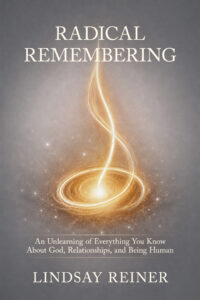 Lindsay Reiner is a writer and visionary exploring what remains when inherited beliefs about God, love, and identity fall away. Her work examines how internal narratives shape human experience and how unlearning can become a path back to truth, agency, and wholeness. Drawing from lived experience, deep inquiry, and spiritual reflection outside religious doctrine, she invites readers to question what they were taught to fear, suppress, or outsource. Radical Remembering is her debut book. https://lindsayreiner.com