
You don’t have a clarity problem. You have an input problem.
Most people don’t realize how loud their inner world has become, because the noise doesn’t sound like noise. It sounds like advice. It sounds like inspiration. It sounds like “doing the work.” But underneath all of it, there’s a quiet erosion happening. The more you consume, the less you trust yourself. Scroll long enough and you start to forget what your own thoughts even feel like.
Social media is the obvious culprit, but it goes deeper than that. It’s the endless stream of opinions, the pressure to optimize every area of your life, the belief that someone out there always knows better than you do. It’s podcasts in the car, videos while you eat, self-help books before bed. It’s dating apps telling you there’s always someone better one swipe away. It’s group chats, comment sections, “relationship experts,” “healing coaches,” and strangers projecting their lives onto yours. At some point, it stops being helpful. It starts being disorienting.
You were never meant to hold this many perspectives at once.
There’s this idea that more information leads to better decisions. That if you just learn enough, consume enough, analyze enough, you’ll finally feel certain. But that’s not how it plays out. What actually happens is decision paralysis. You second-guess everything. You override your gut because it doesn’t match what you just heard in a podcast. You talk yourself out of what felt right five minutes ago because someone online said it’s a “red flag.” You lose your center. And the scary part is, it feels responsible. It feels like growth.
You think you’re being thoughtful. Self-aware. Open-minded. But there’s a difference between being informed and being disconnected from yourself. Most people cross that line without realizing it. Your intuition doesn’t shout over the noise. It gets quieter. It’s subtle. It’s immediate. It doesn’t come with a 10-step explanation or a list of pros and cons. It’s a feeling. A knowing. And it requires space to even register. When your mind is constantly filled with other people’s voices, there’s no room left for your own.
So you start outsourcing your decisions. You ask your friends what they think before you even check in with yourself. You look for validation in comments, in likes, in how someone responds to your text. You want reassurance before you act, and then more reassurance after. And if you don’t get it, you spiral.
This is where the real cost shows up. You stop building self-trust. Every time you ignore your own instinct in favor of outside input, you reinforce the idea that you don’t know what you’re doing. That you need help. That you can’t be trusted with your own life. And the more you practice that, the harder it becomes to hear yourself at all.
It’s not that your intuition disappears. You just stop listening to it.
Dating apps are a perfect example of this dynamic. They train you to evaluate people like options on a menu. They reward quick judgments, surface-level attraction, constant comparison. You start to rely on external cues to tell you how you feel. Chemistry becomes something you analyze instead of experience. You look for signs, rules, patterns. You forget how to just sit with someone and notice what comes up naturally. And then you wonder why everything feels confusing. It’s not confusing. It’s crowded.
The same thing happens with self-help. There’s nothing wrong with wanting to grow. But there’s a point where consuming more advice becomes a way to avoid actually living your life. You stay in learning mode instead of action. You keep searching for the perfect framework, the perfect mindset, the perfect answer that will make everything feel certain before you move.
That moment never comes.
Because clarity doesn’t come from more input. It comes from less. It comes from sitting in the discomfort of not knowing and letting your own answers surface. It comes from making decisions without polling five people first. It comes from doing something, seeing how it feels, and adjusting from there.
That requires a level of internal authority most people haven’t practiced. And it feels risky at first.
When you start pulling back from the noise, there’s a gap. It can feel empty, even lonely. You realize how much you’ve been filling every quiet moment with something. Silence becomes unfamiliar. Your thoughts feel louder because there’s nothing competing with them.
This is where people usually reach for their phone again. But if you stay with it, something shifts. Your mind settles. Your reactions slow down. You stop absorbing everyone else’s urgency. You start to notice your own preferences again, the small, unfiltered ones that don’t need justification. You make decisions faster, and they feel cleaner. Not perfect, but aligned.
You begin to trust yourself in a way that doesn’t need constant reinforcement. That’s the thing no one really talks about. Self-trust isn’t built through more knowledge. It’s built through experience. Through choosing, acting, and seeing that you can handle the outcome. Through realizing that even when you get it “wrong,” you’re still okay.
External noise interrupts that process. It keeps you in your head, in theory, in other people’s lives. It disconnects you from the feedback loop that actually teaches you who you are. You don’t need another opinion. You need space. Space to think. Space to feel. Space to hear the part of you that already knows what’s right for you, even if it doesn’t make sense to anyone else.
This doesn’t mean you shut out the world completely. It means you become selective. You stop treating every piece of content like it deserves access to your mind. You stop assuming that louder voices are wiser ones. You take in what resonates and leave the rest without overanalyzing it.
You start prioritizing your internal signal over external noise. And once you do that, a lot of things get simpler. Not easier, but clearer.
You know when something feels off without needing to justify it. You recognize when you’re forcing something. You stop chasing certainty and start trusting your own timing. You make decisions that actually reflect you, not a version of you shaped by a hundred different influences. That’s where real alignment comes from. Not from perfect information, but from a quiet mind that can actually hear itself.
If you’ve been feeling overwhelmed, confused, or disconnected from your own voice, there’s nothing wrong with you. You’ve just been listening to too many other people.
My book Radical Remembering walks you back to something simpler and more powerful. Your own inner authority.
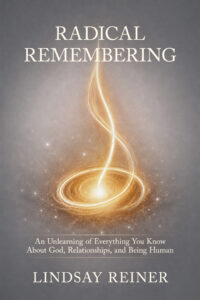 Lindsay Reiner is a writer and visionary exploring what remains when inherited beliefs about God, love, and identity fall away. Her work examines how internal narratives shape human experience and how unlearning can become a path back to truth, agency, and wholeness. Drawing from lived experience, deep inquiry, and spiritual reflection outside religious doctrine, she invites readers to question what they were taught to fear, suppress, or outsource. Radical Remembering is her debut book. https://lindsayreiner.com