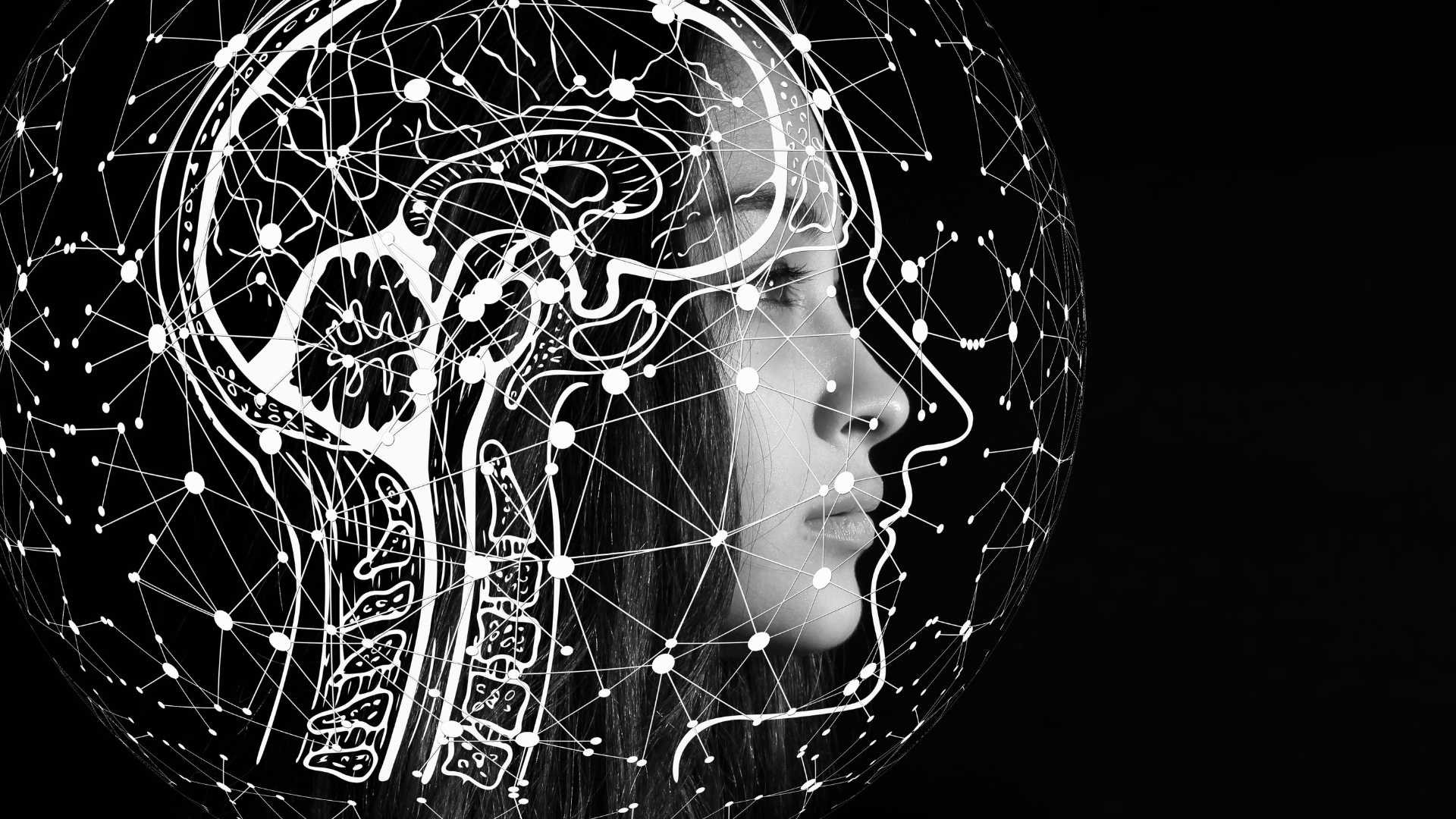
For centuries, consciousness has been understood as a product of the brain. Thoughts, emotions, memories, and language were assumed to arise exclusively from neural activity, encoded in synapses. Yet some experiences challenge this model in profound ways. Near-death experiences in children, especially those occurring during states in which measurable brain activity is drastically reduced, continue to raise questions that conventional neuroscience struggles to answer fully.
Medical science generally assumes that under conditions of severely impaired brain function, consciousness should disappear entirely. Yet many children in our book Where the Light Begins who experience a near-death state report the opposite. They describe forms of awareness that seem unusually clear and vivid as well as heightened perception. Magda, a child in our book, describes: “It was brighter and more real than being awake.”
If consciousness depends entirely on normal brain activity, how can such experiences occur during states in which neurological functioning appears profoundly compromised?
Some researchers suggest that consciousness may function as participation in a larger nonlocal field of awareness and may be expressed through the brain without being entirely confined to it. Instead, the brain might function more like a receiver or tuning device, temporarily accessing deeper layers of consciousness. If consciousness is received, then maybe death is not the end of a signal but the return into the broader field from which it came.
Quantum physics supports this view with its model of entanglement. Two entangled particles can remain connected across any distance. They respond as one system, regardless of space.
What emerges in children’s near-death experiences is also the transformation of identity itself. Several children in our book describe states in which the boundary between self and another form of identity dissolves. Lev states: “There was no self anymore, but I was still there.” Or Milos who describes such a state with the words: “I wasn’t away, but I wasn’t here anymore either.” So, the self can fall away without awareness disappearing.
When the self dissolves, we might enter a realm where particles have no boundaries. If consciousness is indeed nonlocal and woven into a larger field beyond ordinary space, then near-death experiences may be brief moments in which the filters of ordinary perception fall silent, allowing another layer of reality to become visible.
Experiences like those mentioned above continue to shape many of the reflections explored throughout our book Where the Light Begins. Again and again, children describe forms of awareness that seem less bound to physical identity and ordinary perception than traditional models of consciousness would predict.
And maybe this is the deeper question hidden within these experiences: not whether consciousness survives death, but whether it was ever fully confined to the brain in the first place.
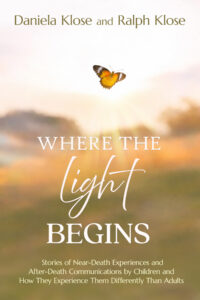
Ralph and Daniela Klose are German authors and long-term collaborative partners in the fields of neuroscience, psychology, and consciousness research. Their book Where the Light Begins explores near-death experiences in children.
Ralph is a retired neuropsychologist with over three decades of clinical and academic experience, and Daniela is a medical writer and translator specializing in neuropsychology and transpersonal psychology. For many years, they worked as ghostwriters for researchers across Europe. They now write under their own names, connecting scientific expertise with years of hospice and end-of-life care experience to explore near-death-experiences and liminal states of consciousness. https://drklose.com