The death of a child leaves an irreparable gap in a family’s life. Not only do the parents’ lives undergo a profound change, but so do the lives of the deceased child’s siblings.
Grief reactions are diverse. While children up to approximately five years of age do not understand the meaning of death, older children and adolescents change after a brother or sister has died. On the one hand, they develop sadness, anger, guilt, social withdrawal, or fear of another death. On the other hand, they develop greater maturity, compassion, a sense of responsibility, moral sensitivity, greater resilience, and a stronger awareness of the meaning of life. Thus, intense grief does not exclude the experience of personal growth. This applies particularly to younger children.
Bereaved children often have a remarkable openness. Compared with their peers, they are more willing to share their thoughts and feelings with others. This also applies to topics concerning the deceased sibling. Among younger children between the ages of six and twelve, this openness is also shown in maintaining a connection with the sibling and believing that the sibling is in a good place where they can run and play again. Many children dream of their deceased brother or sister, hear and sense their presence, as Matthew describes in our book Where the Light Begins: “I dream of him, but it doesn’t feel like dreaming.”
Children also continue to have conversations with their deceased brother or sister. For example, they tell them what they did that day, that they miss them, what is happening at home, and they speak about birthdays and prayers. Furthermore, memories of the deceased sibling are preserved (e.g. memory books, diaries, photographs, toys, artwork, clothing, and letters). Some even sleep in the former bed of the deceased sibling.
In addition to this open processing of the loss, younger children also differ in the way they cope with grief. They are increasingly able to interrupt their grief. These “breaks” from grief, for example through play, help children cope with distressing emotions. The younger the children are, the more quickly grief-related distress and fears decrease, and everyday life returns.
Every grief experience is individual, and accordingly, life priorities, interests, and life goals change. Some children want to live more closely in line with the values or follow the example of their deceased sibling. These may be possible signs of growth and adaptation. Open communication, family cohesion, and social support promote this adaptation.
The stories explored throughout our book, Where the Light Begins, remind us that love survives death. In the hearts of many bereaved children, this love continues to shape memories, relationships, and the quiet courage to move forward.
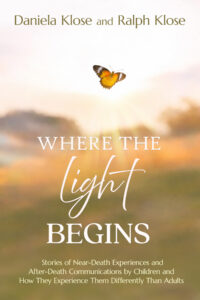 Ralph and Daniela Klose are German authors and long-term collaborative partners in the fields of neuroscience, psychology, and consciousness research. Their book Where the Light Begins explores near-death experiences in children.
Ralph is a retired neuropsychologist with over three decades of clinical and academic experience, and Daniela is a medical writer and translator specializing in neuropsychology and transpersonal psychology. For many years, they worked as ghostwriters for researchers across Europe. They now write under their own names, connecting scientific expertise with years of hospice and end-of-life care experience to explore near-death-experiences and liminal states of consciousness. https://drklose.com