
“Love yourself first.”
You’ve heard it a thousand times. From therapists, influencers, friends trying to give advice, inspirational quotes floating around social media. It sounds wise. Empowering, even. But for a lot of people, that sentence quietly creates a different feeling altogether: something must be wrong with me. Because if you’re struggling in relationships, feeling lonely, or stuck in painful patterns, the message underneath that advice becomes pretty clear. You must not love yourself enough.
And now you’ve got a new problem. Not only are your relationships difficult, apparently, you’re also failing at loving yourself. That idea sends people into a strange loop of self-analysis. They start asking questions like:
Do I love myself yet?
How will I know when I do?
What if I never get there?
It turns love into a kind of emotional finish line. A level of psychological enlightenment you’re supposed to reach before you’re allowed to have healthy relationships. Real life doesn’t work like that.
Human beings don’t learn love in isolation. We learn it in relationship. Through friction, reflection, honesty, and sometimes painful clarity about our patterns. Waiting until you “fully love yourself” before loving someone else is like waiting to get fit before you start exercising. The growth happens in the process.
The real issue isn’t that people don’t love themselves enough. The real issue is that most of us were never taught what love actually looks like in practice. We were taught the feeling of love. We weren’t taught the behaviors. And those behaviors matter far more than some abstract internal state called “self-love.”
The Problem With the Self-Love Narrative
When people say “love yourself first,” they usually mean well. They’re trying to say: don’t tolerate mistreatment. Don’t abandon yourself to keep someone else. Those are good instincts. But the phrase itself is vague and impossible to measure. How do you know when you’ve achieved self-love?
Is it when you feel confident all the time?
When you stop having insecurities?
When you never feel triggered by someone else?
If that’s the standard, nobody qualifies. Even the most emotionally healthy people still feel jealousy, fear, doubt, or longing. Being human includes vulnerability. The real danger of the “love yourself first” idea is that it suggests people must be perfectly healed before they’re worthy of connection.
That belief quietly isolates people who are already hurting. Instead of saying, relationships help us grow, the message becomes fix yourself first, then come back. Life doesn’t work that way. Relationships are one of the primary ways we become aware of ourselves.
They reveal our blind spots.
They show us where we struggle to communicate.
They expose our fears about abandonment, rejection, and intimacy.
You don’t discover those things sitting alone trying to meditate your way into self-love. You discover them when another human being enters the picture.
What Love Actually Requires
Love isn’t a feeling you achieve once and then keep forever. Love is a practice. It shows up through three simple things: awareness, boundaries, and honesty.
Awareness means you pay attention to your own patterns. You notice when you’re chasing validation. You notice when you’re avoiding hard conversations. You notice when fear is driving your behavior instead of clarity.
Awareness doesn’t require perfection. It requires willingness.
Boundaries mean you stop abandoning yourself to keep someone else comfortable. You don’t tolerate disrespect. You don’t twist yourself into a shape that someone else prefers. Boundaries are one of the most practical expressions of self-respect.
Ironically, many people only learn how to set boundaries after being in relationships that showed them why they matter. Again, the learning happens through experience.
Honesty means you stop pretending.
You stop acting like you’re fine when you’re not.
You stop playing games to appear less invested.
You stop shrinking your feelings to avoid vulnerability.
Honesty is uncomfortable, but it creates real intimacy. Without it, relationships become performances. None of these things require you to feel perfect about yourself. They require courage.
Love Grows Through Practice
Think about any other skill in life. You didn’t learn communication by reading about it. You learned it by talking to people. Making mistakes. Saying the wrong thing. Adjusting.
Love works the same way. Every relationship teaches you something.
Maybe you learn that you ignore red flags when you feel chemistry.
Maybe you realize you shut down when conflict appears.
Maybe you discover you’ve been choosing partners who reinforce an old belief about your worth.
Those realizations aren’t proof that you don’t love yourself. They’re proof that you’re becoming aware. And awareness is the real beginning of change. Over time, that awareness naturally leads to better decisions.
You choose partners who treat you well.
You speak up earlier when something feels off.
You stop chasing people who offer breadcrumbs.
That shift doesn’t happen because you finally reached some mythical level of self-love. It happens because you paid attention to your own patterns and decided to do things differently.
The Real Goal Isn’t Self-Love
The real goal is self-alignment:
You act in ways that respect your own values.
You communicate honestly.
You stay connected to yourself while connecting with someone else.
When people live that way, something interesting happens. They naturally start treating themselves with more compassion. Not because they forced themselves to “love themselves,” but because their behavior reflects respect. And respect quietly turns into care. Care turns into trust. Trust turns into something that actually feels like love.
The phrase “love yourself first” tries to skip that entire process. It asks people to jump straight to the final emotional result. Real growth moves the other direction.
You change your awareness.
You change your behavior.
Your feelings slowly follow.
That’s how love develops, both for yourself and for someone else. Not through perfection. Through practice.
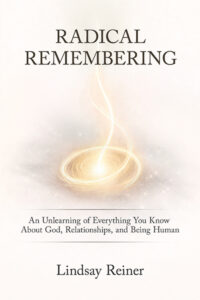
If this perspective resonates, my book Radical Remembering explores love in a grounded, honest way that avoids the clichés and gets to the real work of healing and connection.
 Lindsay Reiner is a writer and visionary exploring what remains when inherited beliefs about God, love, and identity fall away. Her work examines how internal narratives shape human experience and how unlearning can become a path back to truth, agency, and wholeness. Drawing from lived experience, deep inquiry, and spiritual reflection outside religious doctrine, she invites readers to question what they were taught to fear, suppress, or outsource. Radical Remembering is her debut book. https://lindsayreiner.com